


Over the past 65 years, global climate change and its ripple effects across various sectors have emerged as a critical challenge. The 2015 Paris Agreement marked a global commitment to combat climate change, pushing nations toward a sustainable, low-carbon future. Among the primary drivers of climate change are greenhouse gas emissions, which also contribute significantly to air pollution – a pervasive threat to human health and the environment.
Air pollution is a pressing global health crisis. The World Health Organization reports that 99% of the global population lives in areas where air quality falls below acceptable standards. Europe, in particular, is heavily impacted, with air pollution ranking as one of the continent's most significant environmental risks, according to the European Environment Agency’s "European Air Quality Report (2023)." The consequences are dire, leading to premature deaths, increased medical costs, lost productivity, and a lower quality of life.
In the Black Sea Basin, air pollution is an equally serious issue. Countries like Romania, Bulgaria, Turkey, and Ukraine experience heightened levels of pollution from sources such as heavy industry, urbanization, residential heating, and vehicular traffic. The harmful pollutants released from these activities are linked to a range of health problems, including respiratory diseases, cardiovascular complications, and even lung cancer. Beyond the health impacts, air pollution also hinders the economic development and environmental sustainability of these nations.
Given the cross-border nature of air pollution, addressing this issue requires a collaborative, transnational approach. That’s where the "Know What You Breathe: Mobilizing Communities for Air Quality in the Black Sea Basin" (AIRQUEST) project comes in. This initiative aims to provide a comprehensive solution to monitor and reduce air pollution while raising environmental awareness among local communities.
AIRQUEST’s Approach: Monitoring, Education, and Action
At the heart of the AIRQUEST project is an open-access online platform that will provide detailed, real-time air quality data. This platform will integrate satellite-based and land-based monitoring from Romania, Bulgaria, Turkey, and Ukraine, offering an accurate and up-to-date snapshot of the region’s air quality. By leveraging remote sensing technology, the project will not only track pollutants but also calculate carbon emissions, enabling a more complete understanding of air pollution across the Black Sea Basin.
One of the core objectives of AIRQUEST is to make this data accessible and understandable to all stakeholders. The platform will cater to schools, universities, NGOs, local authorities, and the general public, encouraging the use of air pollution data to drive preventive actions. The project emphasizes education, particularly among young people, to instill a sense of responsibility for environmental protection. By empowering these communities with knowledge, AIRQUEST hopes to foster long-term behavioral change that can help reduce pollution levels in the region.
Key Outputs and Activities
The AIRQUEST project will deliver several tangible outputs to aid in the fight against air pollution:
- Air Quality Monitoring System: An accessible website and mobile app will provide real-time data on air quality across the Black Sea Basin.
- STEM-Based Educational Products: Students aged 10-17 will develop innovative solutions to air pollution problems, applying principles from science, technology, engineering, and mathematics.
- Digital Educational Tools: E-storybooks and digital games will be created to engage users in understanding air pollution data and encourage them to think about solutions.
- Community Outreach: Seminars, a scientific symposium, and a project book will help raise awareness among local authorities, policymakers, and the general public about the dangers of air pollution and ways to combat it.
A Collaborative, Cross-Border Effort
The AIRQUEST project brings together a wide range of stakeholders from the Black Sea Basin, uniting them in their efforts to address air pollution. The transnational nature of the project allows for the integration of data from multiple sources, resulting in a more complete picture of the region’s air quality. Moreover, by engaging local authorities, NGOs, educational institutions, and communities, AIRQUEST fosters collaboration that is essential for long-term success.
Through its comprehensive approach, AIRQUEST aims to:
- Improve Air Quality Monitoring: Synchronize land-based and satellite data to provide high-quality air pollution forecasts.
- Enhance Public Awareness: Educate the general public, particularly vulnerable groups, about the risks of air pollution and empower them to use the data to take preventive measures.
- Promote Environmental Education: Equip young people with the knowledge and tools to understand their environmental footprint and advocate for sustainability.
- Facilitate Collaborative Action: Encourage coordinated efforts among local authorities, NGOs, and the public to combat air pollution and protect human health.
The AIRQUEST project stands as a crucial step forward in tackling one of the most pressing environmental issues in the Black Sea Basin, offering hope for cleaner air and healthier communities for generations to come.
_______________________________________________________
What We Achieved Through AIRQUEST
The AIRQUEST – Know What You Breathe: Mobilising Communities for Air Quality in the Black Sea Basin project brought together partners from Bulgaria, Romania, Türkiye, and Ukraine to raise awareness about air quality and encourage greater involvement of local communities in environmental protection.
The main objective of AIRQUEST was to make information about air pollution more accessible, understandable, and useful for citizens, educational institutions, local authorities, and organisations working in environmental protection and sustainable development.
The project combined modern monitoring technologies, satellite observations, digital tools, STEM education, and practical environmental initiatives to demonstrate how scientific data can support more informed decision-making.
Among its most important achievements were the development of an online air quality monitoring platform, the BSB AirQuest mobile application, the AIRPEDIA educational library, international scientific and educational events, and numerous initiatives targeting students, teachers, and local communities.
AIRQUEST: From Scientific Data to Real Social Change
One of the most important aspects of the project was its approach to air pollution as more than just a technical or environmental issue.
AIRQUEST emphasised the connection between air quality, human health, climate change, and people's everyday decisions.
By integrating data from different sources and developing accessible educational resources, the project created opportunities for a better understanding of air pollution and its impacts.
This is particularly important for the Black Sea region, where transport, industrial activities, residential heating, and the transboundary movement of air pollutants create shared challenges that require cooperation between countries.
AIRQUEST CleanAir Map: Air Quality on One Map
One of the project's most significant digital achievements is the AIRQUEST CleanAir Map, an online platform for monitoring and analysing air quality.
The platform integrates data from ground-based monitoring stations and satellite sources, enabling users to track air pollution across the Black Sea region.
Through its interactive map, users can explore information about Bulgaria, Romania, Türkiye, and Ukraine, as well as monitor various indicators related to ambient air quality.
The main pollutants monitored include fine particulate matter (PM2.5 and PM10), nitrogen dioxide (NO₂), ozone (O₃), sulphur dioxide (SO₂), and carbon monoxide (CO).
In addition to current measurements, the platform provides opportunities to analyse trends, including changes in air quality indicators over recent hours.
This makes CleanAir Map a valuable resource not only for specialists but also for citizens, schools, universities, local authorities, and non-governmental organisations seeking a better understanding of air quality.
Particularly valuable is the ability to explore information at both local and regional levels, as air pollution does not respect administrative or national borders.
Explore the AIRQUEST CleanAir Map:
AIRQUEST – Interactive Air Quality Map
BSB AirQuest: A Mobile Application for Air Quality
As a complement to the online platform, the project also developed the BSB AirQuest mobile application, providing air quality information directly to users' mobile devices.
The application allows users to monitor the Air Quality Index (AQI) and major atmospheric pollutants, including PM2.5, PM10, ozone, and nitrogen dioxide.
Its main features include location-based information, notifications about changes in air quality, short-term forecasts, and recommendations based on pollution levels.
The application also includes educational resources that help users learn more about pollution sources, their impacts, and ways to reduce associated risks.
BSB AirQuest was developed to present scientific information in an accessible and user-friendly format that can be easily incorporated into everyday life.
The application is free and available for both Android and iOS devices.
Download BSB AirQuest:
BSB AirQuest – Apple App Store
AIRPEDIA: A Digital Library for Clean Air
Another important achievement of the project is AIRPEDIA, an online educational library dedicated to air quality, pollution, its impacts, and potential solutions.
AIRPEDIA brings together scientific and practical information in a structured and accessible format that can be used by school students, teachers, university students, citizens, experts, and representatives of public institutions.
The library covers a wide range of topics, from major air pollutants and their sources to monitoring methods, impacts on human health and the natural environment, regional environmental policies, and actions to reduce pollution.
Special attention is given to the Black Sea Basin, the common environmental challenges faced by countries in the region, and opportunities for cross-border cooperation.
AIRPEDIA also explores more specialised topics, including the use of satellite technologies, ground-based monitoring stations, digital applications, and air quality indices.
One of the resource's main advantages is that the information is organised into individual thematic chapters, allowing users to explore content according to their interests and needs.
AIRPEDIA is also available in English, making it particularly valuable for educational initiatives and raising environmental awareness in Bulgaria.
Explore AIRPEDIA:
AIRQUEST and STEM Education: Young People as Drivers of Change
One of the most significant components of AIRQUEST focused on education, the development of scientific thinking, and the active involvement of young people.
The project applied the STEM approach – Science, Technology, Engineering and Mathematics – to demonstrate how science and technology can be used to understand and address real environmental challenges.
Through training activities, student competitions, creative initiatives, and international exchanges, AIRQUEST encouraged young participants not only to learn about air quality challenges but also to develop their own ideas and solutions.
STEM Training for Teachers and Future Educators
As part of the project, BATTI organised STEM training involving 35 teachers and future educators.
The training focused on the use of practical and interactive teaching methods addressing air pollution, environmental protection, and sustainable development.
Participants had the opportunity to explore educational approaches that make environmental issues more engaging and easier to understand.
In this way, AIRQUEST contributed not only to improving participants' knowledge but also to promoting new educational practices that can continue to be applied in school environments.


National STEM Competition
As part of the educational initiatives, a national STEM competition was organised, bringing together 20 student teams.
Participants worked on practical challenges related to air quality, environmental problems, and potential technological solutions.
The competition encouraged creativity, teamwork, scientific thinking, and the ability to apply knowledge in real-life situations.
Through this initiative, students became active participants in exploring solutions for a cleaner and healthier environment.


International STEM Exhibition in Varna
One of AIRQUEST's most significant international educational achievements was the STEM Exhibition, held on 20 June 2026 in Varna, Bulgaria.
The event brought together student teams, teachers, parents, and representatives of project partners from Bulgaria, Romania, Türkiye, and Ukraine.
Young participants presented their projects and innovative ideas related to air pollution, climate change, sustainable lifestyles, environmental protection, and green technologies.
The exhibition provided an opportunity for international knowledge and experience exchange, as well as for showcasing practical solutions developed through STEM-based approaches.
For BATTI, as the Bulgarian project partner, the event was an important opportunity to demonstrate how international cooperation and education can bring young people together around shared environmental goals.
Explore the AIRQUEST International STEM Exhibition


Creative Writing Competition – Clean Air Through Children's Eyes
AIRQUEST also encouraged creative thinking through a story-writing competition dedicated to air pollution.
The initiative attracted more than 100 students, who shared their perspectives on the relationship between clean air, human health, nature, and the future.
The competition gave children the opportunity to explore environmental topics through storytelling, imagination, and personal expression.
This activity demonstrated that environmental education is not limited to scientific experiments and technology. Creativity can also be a powerful tool for developing a responsible attitude towards the environment.
Digital Educational Game: Learning Through Interactive Challenges
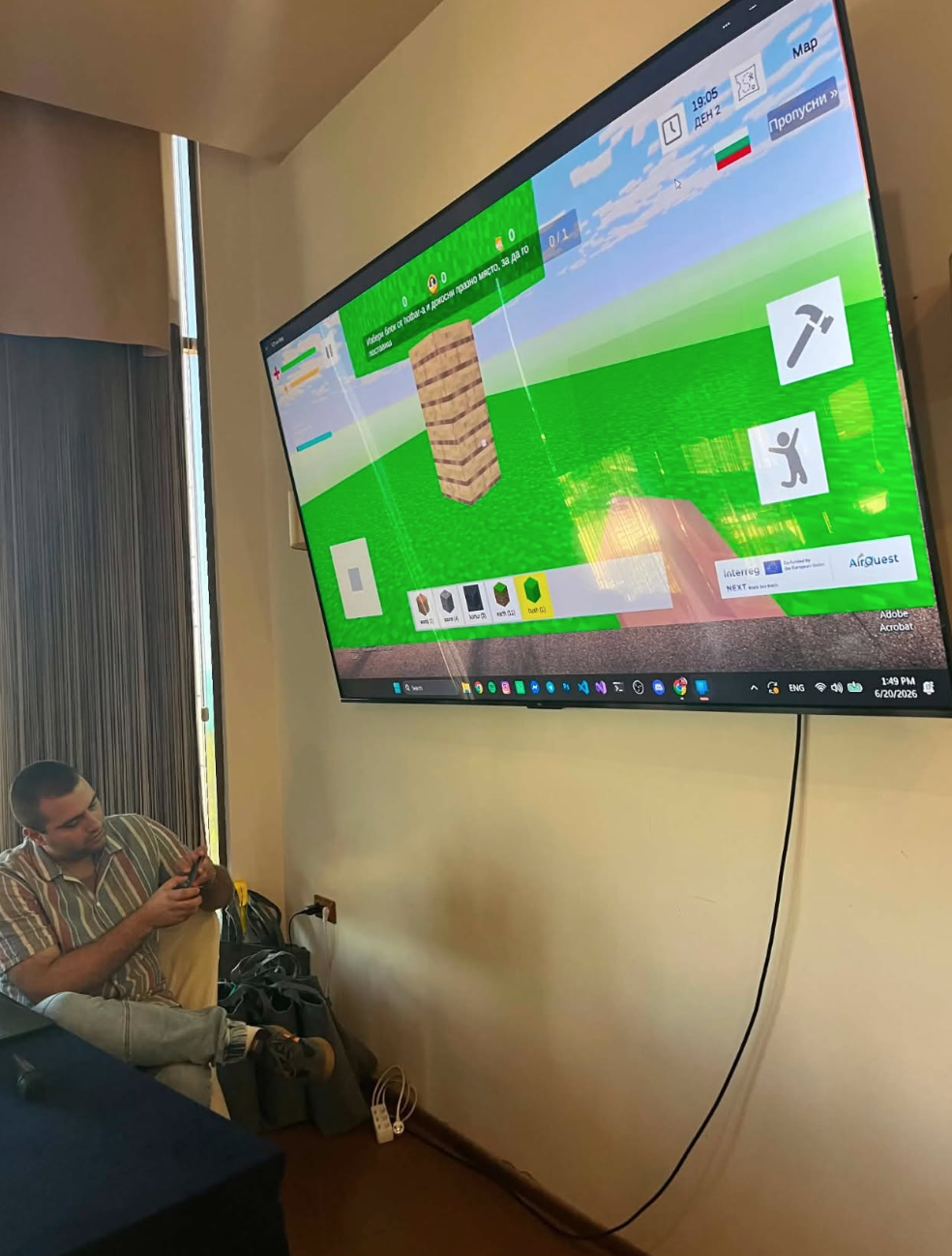
Among AIRQUEST's innovative educational developments is a digital game dedicated to air quality and environmental challenges in the Black Sea region.
The game was designed as an interactive virtual environment inspired by popular gaming approaches, allowing participants to learn about pollution through missions, practical tasks, and various scenarios.
The concept incorporates real-world and historical air pollution data, which can be used to create virtual challenges.
Through gameplay mechanics, young users are encouraged to discover the connections between human activities, pollution, the condition of the natural environment, and possible actions for improvement.
The game provides an interesting example of how scientific data can be transformed into an interactive educational tool. In June 2026, the game was presented as a development in its final stages.
Download the game:
AIRQUEST Game – Apple App Store
BATTI's Contribution: Environmental Education and Practical Actions in Bulgaria
As a partner in AIRQUEST, the Bulgarian Association for Technology Transfer and Innovation (BATTI) implemented a range of activities aimed at raising environmental awareness and engaging local communities.
The main areas of activity included STEM education, working with students and teachers, awareness-raising campaigns, promoting eco-friendly driving, and practical initiatives for a greener environment.
According to information published by BATTI, more than 480 people directly participated in the project's educational and community initiatives.
180 New Trees Planted in Valchi Dol Municipality
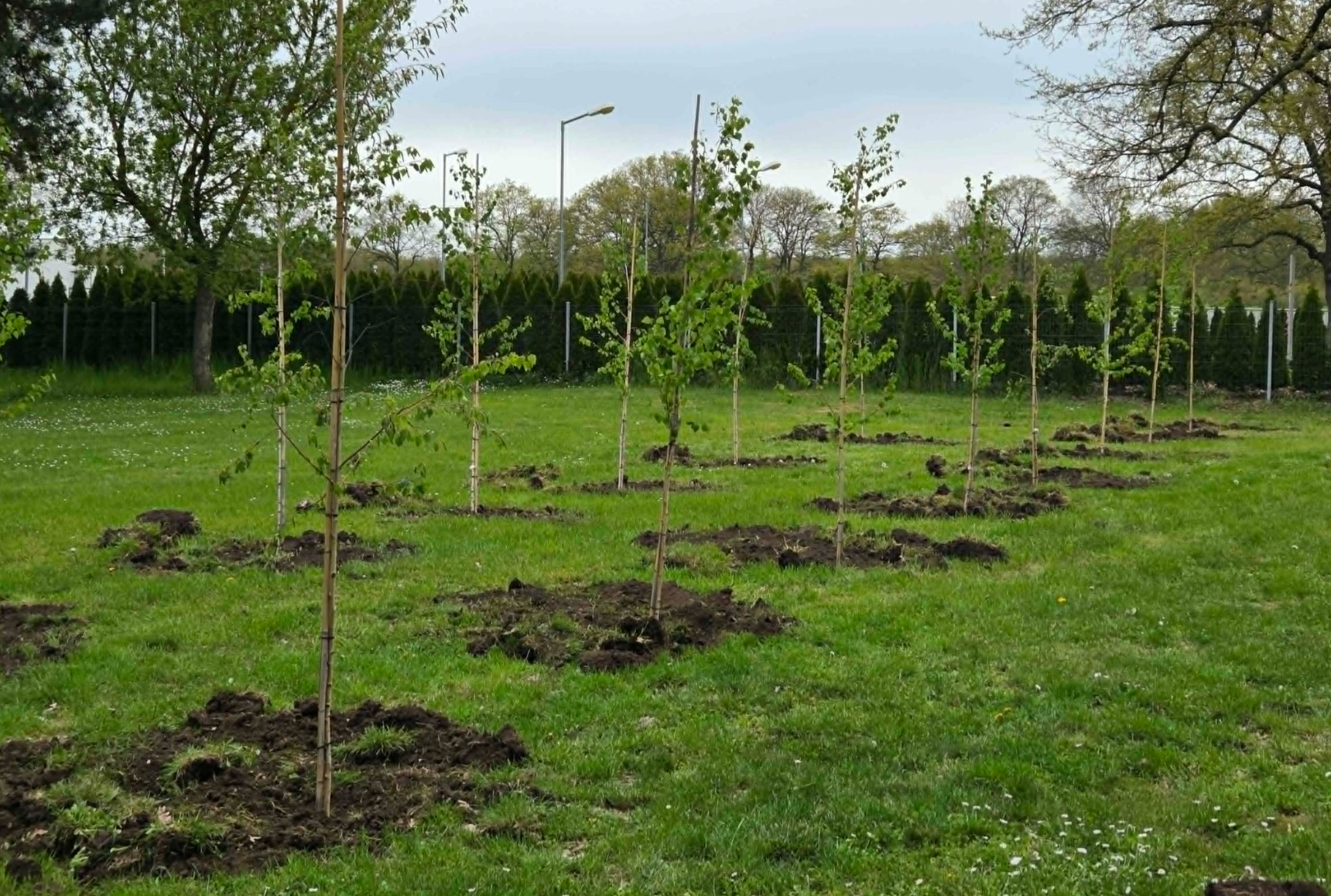
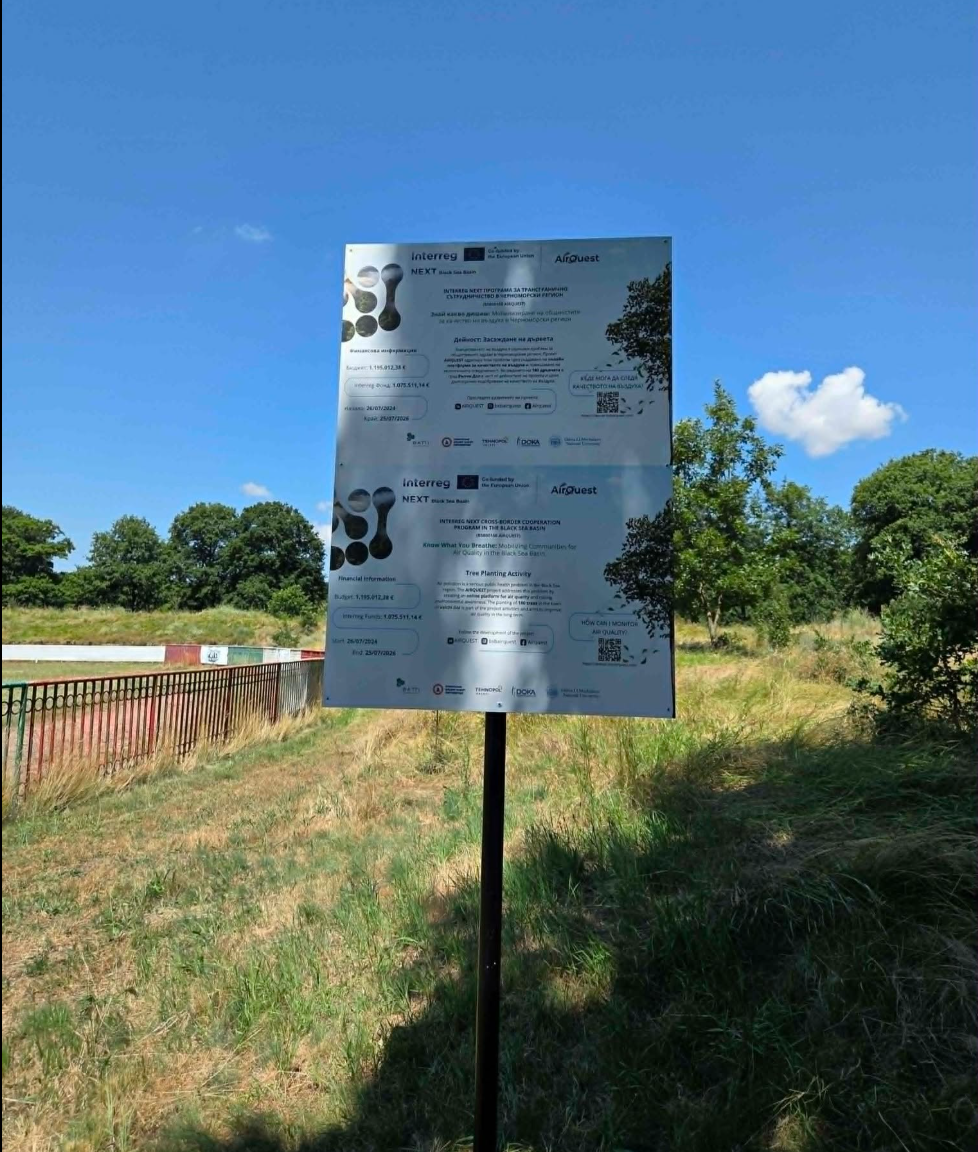
One of the most visible practical AIRQUEST initiatives in Bulgaria was the planting of 180 trees in Valchi Dol Municipality.
The activity brought together members of the local community around the idea that efforts to achieve a cleaner environment should involve not only information and education but also concrete actions at the local level.
The tree-planting initiative contributed to enriching green spaces and encouraged public engagement with biodiversity, air quality, and sustainable development.
An important aspect of the initiative was the inclusion of follow-up monitoring and care for the newly planted trees, turning a one-time environmental activity into a longer-term commitment.
AIRQUEST emphasises that planting trees alone cannot solve the problem of air pollution. However, it is an important part of broader efforts to create greener and healthier local environments.
Training for Future Drivers: More Responsible Behaviour on the Road
Within AIRQUEST, BATTI also organised specialised seminars for learner drivers, involving 62 future drivers.
The training sessions explored the relationship between road transport and air pollution, including the impact of exhaust emissions, particulate matter, and everyday driving habits.
Particular attention was given to eco-driving, proper vehicle maintenance, avoiding unnecessary engine idling, and more efficient fuel consumption.
The initiative demonstrated how even relatively small changes in driving behaviour can contribute to more responsible mobility and the reduction of unnecessary emissions.


Promotional Video – The Mission and Achievements of AIRQUEST
As part of the project's communication activities, an AIRQUEST promotional video was produced, presenting the project's main objectives, the digital tools developed, and the educational and environmental initiatives implemented.
The video highlights the connection between air pollution, human health, and the need for accessible and reliable information.
Special attention is given to the role of the online platform, STEM training sessions, student competitions, the international exhibition, and other initiatives through which the project reached different target groups.
The promotional video summarises one of AIRQUEST's most important messages – the first step towards cleaner air is understanding what we breathe.
Watch the AIRQUEST promotional video:
_______________________________________________________
Key AIRQUEST Results and Resources
Beyond the events and initiatives implemented, AIRQUEST leaves behind digital tools, educational materials, and scientific resources that can continue to be used by citizens, educational institutions, experts, and public organisations.
Several of these achievements stand out for their significant practical value.
AIRQUEST CleanAir Map: Air Quality Monitoring Platform
AIRQUEST CleanAir Map is one of the project's main technological achievements.
The platform integrates information from ground-based and satellite sources, providing interactive access to air quality data.
It enables pollution monitoring, comparison of indicators, and a better understanding of regional trends.
The tool can be used both for everyday awareness and for educational activities and expert analysis.
Open the AIRQUEST CleanAir Map
AIRPEDIA: Online Educational Library
AIRPEDIA is a comprehensive educational resource that brings together knowledge about air quality, major pollutants, pollution sources, health impacts, and potential solutions.
The library is useful both for individual learning and for developing teaching materials, environmental campaigns, and public awareness initiatives.
Thanks to its thematic structure and the availability of a Bulgarian version, AIRPEDIA makes scientific information accessible to a wide range of users.
BSB AirQuest Mobile Application
The BSB AirQuest mobile application provides convenient access to air quality information through smartphones and tablets.
It combines up-to-date measurements, information about major pollutants, notifications, and recommendations, helping users make more informed everyday decisions.
The application is one of AIRQUEST's most practical results, as it makes air pollution data more easily accessible beyond specialised platforms.
Download the Application for Android
Download the Application for iOS
AIRQUEST Proceedings Book
Among the project's important scientific achievements is the proceedings book from the international symposium "Clean Air for a Sustainable and Healthy Future", held in April 2026 in Zonguldak, Türkiye.
The symposium brought together scientists, researchers, experts, and representatives of various organisations working on air pollution, climate change, environmental technologies, and sustainable development.
The published proceedings book includes scientific papers and analyses addressing different aspects of air quality, climate-related risks, and opportunities for more sustainable policies.
It is a valuable resource for universities, research organisations, specialists, and public institutions seeking more in-depth information on these topics.
Download AIRQUEST International Symposium – Proceedings Book (PDF)
AIRQUEST: From Information to Action for Cleaner Air
AIRQUEST demonstrates that a better understanding of air quality is an important step towards more responsible behaviour and more sustainable local communities.
The project went beyond collecting scientific data and developing technological tools. Through educational activities, international exchanges, engagement with students and teachers, and practical environmental initiatives, it created opportunities for meaningful citizen participation in efforts to achieve a cleaner environment.
For BATTI, a particularly significant contribution was the implementation of activities in Bulgaria, ranging from STEM training and student competitions to the international exhibition in Varna, training for future drivers, and the planting of 180 trees in Valchi Dol.
These initiatives demonstrate that scientific knowledge, digital technologies, and local action can complement one another and create long-term value for society.
Even after the project's completion, the tools and educational resources developed remain a foundation for future work on air quality, environmental protection, and sustainable development.
AIRQUEST leaves behind more than data and digital solutions – it leaves more informed communities, new knowledge, and practical examples of how everyone can contribute to cleaner air.
Learn more about the project and explore its achievements: AIRQUEST Official Website