

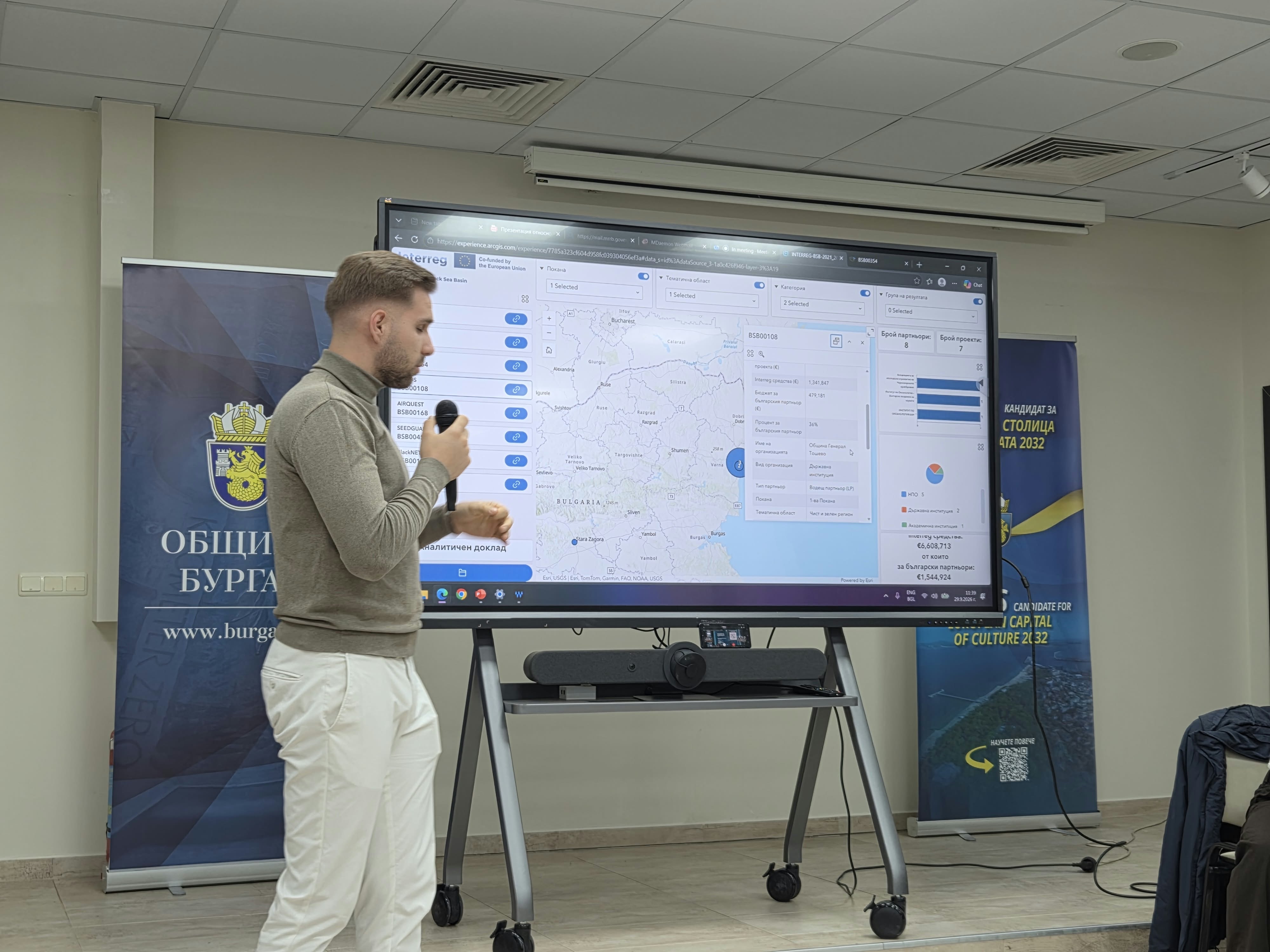
On 29 September 2026, BATTI participated in regional consultations dedicated to the preparation of the future Interreg Black Sea Basin Programme for the 2028–2034 programming period.
The event was organised by the Bulgarian Ministry of Regional Development and Public Works (MRDPW) and took place at the Sea Casino Cultural Centre in Burgas, Bulgaria.
The consultations brought together representatives of various organisations and stakeholders, providing an opportunity to exchange experiences, discuss future European priorities and identify key regional needs in the context of territorial cooperation.
European Cooperation – Achievements and Future Perspectives
The event was officially opened by Milen Obretenov, Director of the Territorial Cooperation Management Directorate.
The first part of the programme focused on Bulgaria’s experience in the Interreg NEXT Black Sea Basin Programme 2021–2027 and the current funding opportunities available through the Interreg Euro-MED Programme 2021–2027.
Particular attention was given to preparations for the new 2028–2034 programming period, including the proposed European regulatory framework, future funding policies and the main findings and recommendations of the Black Sea Basin territorial analysis.
For BATTI, these discussions were particularly relevant given our ongoing involvement in European cooperation projects focusing on technology transfer, innovation, sustainable development and international partnerships.
Regional Needs at the Centre of the Discussions
An important part of the event was dedicated to thematic roundtable discussions focusing on identifying regional needs and exploring opportunities for future joint projects.
These sessions provided us with an opportunity to exchange ideas and experiences with other participants and discuss challenges and opportunities for strengthening cross-border cooperation.
The consultations aimed to gather stakeholder perspectives and concrete proposals that could contribute to the preparation of the future programme and help ensure that its priorities reflect the actual needs of the Black Sea region.